Tuesday, October 20, 2009

Red Rose Tea! Red Rose Tea!


Remember the Red Rose Tea commercial with the wild jazz band chimps? These guys were The Marquis Chimps, Charlie, Enoch, and Candy. In 1960, they were in three TV commercials. One showed them as cowboys, another playing golf, and the most famous was the Red Rose Tea commercial.
In 1961-62, these chimps starred in the comedy called the Hathaways. They also made guest appearances on numerous shows such as The Kraft Music Hall and The Jack Benny Hour.
I bet you loved this commercial as much as I did!

Sunday, October 4, 2009

SPAM~The Miracle Meat! The Anytime Meat!


SPAM SPAM SPAM SPAM Hormel's new miracle meat in a can. Tastes fine, saves time. If you want something good, ask for SPAM! Sung to the tune of the chorus of, "My Bonnie Lies Over The Ocean," this was probably the first singing commercial, launched in 1940.
In 1926, this product was developed by Hormel as America's first canned ham, no refrigeration required. During world war two, sales boomed. It wasn't rationed like beef and became a prime staple in American meals.
Nikita Kruschev credits SPAM with the survival of the Russian army. I know my dad survived without it. When he was in the Cavalry during the war, they buried the stuff in the desert.
In the 1940's and 50's, the Hormel Girls performing throughout the country distributed SPAM door to door. Wow! Can you imagine answering your door and finding Hormel Girls standing there and probably singing the song, handing you a can of SPAM?
Did you know that:
*By world war two, over 20 thousand tons of SPAM were sold?
*Hawaiians eat an average of 4 cans of SPAM per year, more than any place on earth?
*In Korea, SPAM is sold in gift boxes and the stolen products are on the black market?
*By 1959 a billion cans of SPAM had been sold?
Some flavors include, hot and spicy, less sodium, lite, oven roasted turkey? hickory smoked, SPAM with bacon, cheese, garlic and even a SPAM spread.
In Hawaii, SPAM is so popular, it is called, "The Hawaiian Steak." McDonald's and Berger King feature SPAM on the menu. The reason for it's popularity in that area of the world, is due to the surplus from the soldiers that made it's way into native diets.
In Europe, during the 1940's, a popular food, in addition to fish and chips, were deep fried sliced battered SPAM called "SPAM fritters."
In Austin, Minnesota, the home of Hormel's headquarters, you can attend the SPAM festival, or stop at the famous SPAM museum. While there, don't forget to drop by Johnny's restaurant for some real home cookin' right off the SPAMarama menu!

Bon Appetit!
Sunday, September 27, 2009

Crash Pad


May 10, 1969

Dear Daddy,
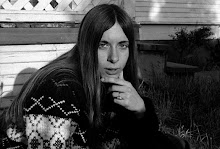
I am having such a cool time. You wouldn't believe Keeper and Mary's place. It's a total crash pad. It's better than any place in BG. There are about 20 of us just hangin out. We camp in the yard and travel around to see the sites. There's a hip fish market on the pier where we buy our dinner to cook. The dude gives us fish parts and we go around the back of his place and drop them down in the ocean to feed the sea lions. It's so far out! The other day, though, Lippy, took us for a ride up the coast. He's from New York and went to college with us at BG. Anyway, he's got this freakie car. It's 1949 Buick. It's big and cool. You have to pull the brake pedal up with a rope. That's not so cool. We were going up the mountain real slow and he had to put on the brakes, I mean, pull the rope. Well, it came off the pedal, the car starts rolling backwards and we all jumped out. Man, I thought I was having a bad trip or something. The car hit the mountain and stopped. We all got back in and were laughing way too hard. It's ok, don't worry. I'm fine and didn't die or something. Maybe I have good Karma after all. Well, just checkin in. We are starting to plan our trip up to Washington, but not too much. It's really not good to plan stuff. It's more fun to just let it happen. Dig?
Love and Peace,
Joyce

Saturday, September 26, 2009

I Want To Be A Breck Girl!


Dr. John Breck developed one of the first liquid shampoos in 1908, in Massachusetts.
During the first years of his business, distribution was only in the New England area. Then in 1946, the shampoo was only sold in beauty salons. Advertising began in 1932, but was limited to trade publications.
In 1936, Edward Breck, son of John, took over the management of the company. He became acquainted with Charles Sheldon, a portrait painter and illustrator. He was noted for his art nouveau style, pastels and portraits of movie stars. He created his first pastel portraits for Breck in 1936, which became one of America's longest running ad campaign.
The first Breck girl was 17 year old Roma Whitney and was registered as Breck's trademark in 1951. Sheldon had created 107 oil paintings and pastels but favored "ordinary women" such as family members, neighbors and employees.
After Sheldon retired, Ralph Williams continued the Breck campaign. He used brighter colors and as women became more independent, he carefully integrated each girls personality.
These advertisements usually ran on the back covers of magazines such as Ladies Home
Journal, Seventeen, Vogue, and more. Some of these Breck girls included, Marylin Skeldon, Cheryl Tiegs, Cybill Shepherd, Jaclyn Smith, Kim Basinger, Brook Shields, and Christy Brinkley.
By the 1960's. Breck held about a 20% share of the shampoo market and the Breck girls are now in the advertising records in the Smithsonian National Museum of American History.

Monday, September 21, 2009

Wooly Willy


Introduced in 1955,Wooly Willy is a classic. "He has a magnetic personality and you can change his character with the wand."
Wooly Willy was born at the Smethport Specialty Company in Smethport, Pa. During world war two, all toy production stopped as the materials were only available for war use.
Smethport Specialty became R.W. Herzog and was a subcontractor for Sylvania Co. supplying mica insulators for radio tubes. (I bet you remember radio tubes) These tubes were used in proximity fuses, a device to control the height of a bomb explosion. Millions of these insulators were produced at the facility.
After the war, mica insulator production continued, but only for civilian use. As materials became available, toy production continued.
In 1955, James Herzog discovered that dust from magnetic grindings could be used for magnetic drawings. Thus, Willy Wooly was born. Lenonard MacKowski, an artist, designed the display cover. He often hid his name in the art.
In the beginning, there wasn't a toy buyer who would purchase this new toy. Finally, a buyer from the G.C. Murphy chain agreed to buy 6 dozen to prove it wouldn't sell. He was wrong , the toy sold out and he then ordered 12,000 more, which sold out in a few weeks.
Wooly Willy, being the toy of choice and for just twenty nine cents, you could play with one of the most popular toys made between 1950-1980.
The demand for the drawing sets exploded to include colored hair. The company then moved to Magnetic Avenue and built a new facility where it continues today.

Wednesday, August 26, 2009

Let's Twist Again Like We Did Last Summer!


In 1959 Hank Ballard & The Midnighters wrote and released the song, "The Twist." In 1960 Chubby Checker redid the song which then became #1 on the Billboard charts. It made it's debut on the Dick Clark Show and became a dance craze. The critics felt the dance was too provocative and was the first international dance of it's kind.
The Twist's original inspiration came from an African American plantation dance called, "wringin and twistin." It is traced back to the 1890's.
As the years went by, other recordings were made of the song. In 1961 Joey Dee and the Starlighters sang "The Peppermint Twist." I'm sure you remember the Peppermint Lounge. Then in 1962, Bo Diddley released his album, Bo Diddley's A Twistin. His songs were, "Bo's Twist" and "Mama Don't Allow No Twistin."
Bill Haley and The Comets put a twist on the Twist and released the recordings, "The Spanish Twist" and "Florida Twist."
The Twist is easy! Just pretend to drop a cigarette butt on the ground, put the ball of your foot over the imaginary cigarette and twist it to and fro like you are putting it out. Then at the same time, put an imaginary bath towel behind your back and pull it from side to side like you are drying your rear. Voila! You're doing the twist! It's so simple and you can dance alone with no partner contact. Now, I can just see you right now trying to do the twist. So come on baby, let's do the twist. Oh yeah, just like this!

Friday, August 14, 2009

The Music The Mud!


Did you honestly think I would forget about this? August 15, 1969 was one of America's biggest parties. The music, the mud all took place at Max Yasgur's dairy farm in New York. What better reason, other than a terrorist attack, to close the NY freeway.
The Hog Farm Commune helped organize the campgrounds, operate free kitchens set up bad trip tents and introduce yoga and granola bars to the masses. A half a million strong!
There weren't cell phones or the Internet back then, but the underground press spread the word. Originally, Abbie Hoffman referred to the concert as Woodstock Nation, now in the 21st century, it is known as The Woodstock Moment.
Checkout the website woodstock.com for great memories of this great 3 days in our history. Meanwhile, I would like to hear about your experiences at Woodstock.
Peace.


Woodstock: 40 Years on: Back to Yasgur's Farm (6CD, Limited Edition)

Saturday, August 8, 2009

Red And The Pledge


This video was taken from the Red Skelton Hour show January 14,1969. He touched the hearts of Americans with his Pledge of Allegiance, explaining the meaning of each and every word.
Things have certainly changed since then and it seems to me that we as a nation have somehow gotten off track. Perhaps this video can show us the way back.

Thursday, August 6, 2009

Let's Have Lunch With Soupy!


I really loved (and still do) Soupy Sales. Once in my travels, I saw him in the San Francisco airport. I thought I just saw God! It was truly a rush!
From 1959-1961, on Saturday's at noon, it was the Lunch With Soupy show. You could have lunch with him right in your living room!
His friends were White Fang. You could only see his big paw because he was the biggest dog in the world. Also, there was Black Tooth, Pookie the Lion, Hippy the Hippo, and Herman the Flea. All of these voices were done by Clyde Adler.
Born Milton Soupman in 1926, his family gave him his nickname. His older brothers were Ham Bone, Chicken Bone and he was Soup Bone, which was shortened to Soupy. Sales came from the name of an Ohio comedian.
While attending grad school, Soupy worked in night clubs as a comedian, singer and dancer. He began his television career with station WKRC-TV with his show, Soupy's Soda Shop. It was TV's first teen dance program.
He was best know for Lunch With Soupy Sales. It was filled with rapid fire jokes and gags and his best known trademark, a pie in the face, He claims to be hit by over 25,000 pies.
Later in his career, Sales had a radio show on WNBG-AM in New York. On New Years Day in 1965, he was upset about having to work. At the end of the show, he told the kids to tiptoe in to their parents bedroom when they were sleeping and take the funny green pieces of paper with the presidents faces on them and send them to him. He in return, would mail them a post card from Puerto Rice. Well, the plan worked and Soupy ended up getting alot of money, which he donated to charity. The station was so upset over the matter and let him go. With so many kids ending up picketing the station, they had no choice but to bring him back.
Howard Sterns had a show at the same station and they did not get along. Sterns cut the strings of Soupy's studio piano just to torture him.
In his career, Soupy did several games shows which I am sure will become future blog posts here. They were, What's My Line, To Tell The Truth, and Hollywood Squares.
No doubt about it, Soupy is one great talent with lots of stories to tell. In fact, you can even follow him on Twitter!

Saturday, July 18, 2009

The Whole Earth Catalog...Stay Hungry, Stay Foolish!


You have to remember The Whole Earth Catalog! It was the bible of the American counterculture. Published in 1968 by Steward Brand, his goal was to have anyone to be able to pick up a telephone and find complete information on anything.
The publication was an access to tools and education for the reader to shape his own environment and find some inspiration. This was a large book and later editions were an inch thick. In 1972, the catalog won the National Book Award, the first time ever for a catalog.
In 1966, Steward Brand initiated a public campaign to have NASA release the rumored satellite image of earth as seen from space. He felt this image of our planet would be a powerful symbol.
In 2005, the catalog was compared to Google search engines in paperback form. In the 1960's, there was no Internet or hundreds of cable channels. As the web and blogs arrived, Whole Earth Catalogs disappeared. Everything The Whole Earth Catalog did, the web did better. It became a transfer from counterculture to cyberculture.
There were seven sections in the 1968 catalog:
~Understanding Whole Systems
~Shelter And Land Use
~Industry And Craft
~Communications
~Community
~Nomadics
~Learning
In each section, the best tools and books were listed by the editors. This included reviews, images, uses, supplies and prices.
The catalog was a huge success for hippies and survivalists. The publication was not intended for very long, just long enough for the editors to complete a good overview of available tools and resources for everyone that needed them.
In these times, I think The Whole Earth Catalog is just the ticket. It will take you back to the times when life was a bit more wholesome and basic. I found my old original copy. It's got the whole earth in my hands.